 Kazakhstan Travel Guide - Canyons, Lakes & Tien Shan Hiking

.
Travel Notes: Asia - Kazakhstan Travel Notes.


Short URL: https://tnot.es/KZ
Kazakhstan Travel and Tourism on Travel Notes
Explore the Majesty of Kazakhstan - Diversity in Central Asia
From the soaring peaks of the Tien Shan mountains to the ancient Silk Road cities, discover Kazakhstan's breathtaking landscapes and rich cultural heritage.
About Kazakhstan
An intriguing destination for travellers, Kazakhstan boasts a unique blend of history, culture, and natural beauty; a nation undergoing rapid development.
Countries neighbouring Kazakhstan: Russia, China, Kyrgyzstan, Uzbekistan and Turkmenistan.

 Add a Business Listing -
Add a Location -
Add a Lodging - Add Travel Content
- Add URL
- Travel Services.
Add a Business Listing -
Add a Location -
Add a Lodging - Add Travel Content
- Add URL
- Travel Services.
Mapping Kazakhstan
Map of Kazakhstan

Kazakhstan was a former republic of the Union of Soviet Socialist Republics (USSR).
Together with Kyrgyzstan, Tajikistan, Turkmenistan and Uzbekistan it forms a region known as Central Asia.
The capital of Kazakhstan is Astana.
Kazakhstan Overview
Kazakhstan is a country located in Central Asia, with a small portion of its territory in Eastern Europe.
It is the world's largest landlocked country and shares borders with Russia to the north, China to the east, Kyrgyzstan to the south-east, Uzbekistan to the south, Turkmenistan to the south-west, and the Caspian Sea to the west.
Astana (Nur-Sultan)
The capital city of Kazakhstan was formerly known as Astana but was renamed Nur-Sultan in 2019 in honor of the country's long-serving president, Nursultan Nazarbayev.
The city is known for its modern architecture, including the Bayterek Tower and the Khan Shatyr Entertainment Centre.
Baikonur Cosmodrome
Baikonur Cosmodrome, located in Kazakhstan, is the world's first and largest operational space launch facility.
It has played a significant role in space exploration, including being the primary launch site for manned missions of the Russian space program.
Economy
Kazakhstan has a rapidly developing economy driven by its vast natural resources, including oil, gas, minerals, and metals.
Kazakhstan is also one of the world's leading producers of uranium.
The country has made efforts to diversify its economy, focusing on sectors such as agriculture, manufacturing, and promoting tourism in Kazakhstan.
Ethnicity and Culture
Kazakhstan is a multiethnic country with a population composed of various ethnic groups.
The Kazakhs are the largest ethnic group, followed by Russians, Uzbeks, Ukrainians, and others.
The country has a blend of different cultures and traditions influenced by its nomadic heritage and the impact of Russian and Central Asian cultures.
History
Kazakhstan has a rich history dating back thousands of years.
It was inhabited by nomadic tribes and later became part of various empires, including the Mongol Empire and the Kazakh Khanate.
Kazakhstan was later incorporated into the Russian Empire and the Soviet Union before gaining independence in 1991.
Hospitality and Cuisine
Kazakh people are known for their warm hospitality, and traditional Kazakh cuisine reflects the nomadic lifestyle.
Popular dishes include beshbarmak (boiled meat with pasta), kazy (horse meat sausage), and kumis (fermented mare's milk).
Important Personalities
Nursultan Nazarbayev, the first President of Kazakhstan, played a significant role in the country's development during its early years of independence.
Other notable figures include writer and poet Mukhtar Auezov, astronaut Tokhtar Aubakirov, and boxer Gennady Golovkin.
Landscape
Kazakhstan boasts diverse landscapes, ranging from vast steppes and deserts to mountains, including parts of the Tien Shan and Altai ranges.
The country is also home to the Caspian Sea, the world's largest inland body of water.
Language
The official language of Kazakhstan is Kazakh, a Turkic language written in Cyrillic script.
Russian is also widely spoken and has the status of an official language alongside Kazakh.
Tourism
Kazakhstan is gradually becoming a popular tourist destination, offering unique attractions such as the Charyn Canyon, the singing sand dunes of Altyn-Emel National Park, and the beautiful lakes of the Almaty region.
Visitors can also experience the country's nomadic heritage through traditional yurt stays and cultural festivals.
Neo Nomads
Kazakhstanis (Neo Nomads) should visit twenty selected locations in the regions of Kazakhstan, take memorable photos against the background of special photo frames and post them on their social networks.
Visiting Kazakhstan
If you're planning to visit Kazakhstan, start your journey in the capital city, which boasts modern architecture and grandiose structures.
Visit iconic landmarks like the Baiterek Tower, the Palace of Peace and Reconciliation, and the Hazret Sultan Mosque.
Almaty
Head to Kazakhstan's largest city, Almaty, which is surrounded by stunning mountains.
Explore the beautiful Zenkov Cathedral, stroll through the Central State Museum, and take a cable car ride to the top of Kok Tobe for panoramic views of the city.
Baikonur Cosmodrome
If you're interested in space exploration, make sure to visit the Baikonur Cosmodrome, the world's oldest and largest space launch facility.
You might have the opportunity to witness a rocket launch, if the timing is right.
Charyn Canyon
Journey to Charyn Canyon, often referred to as the 'Grand Canyon's little brother'.
Marvel at its majestic rock formations, deep gorges, and the vibrant red hues that paint the landscape.
Kazakh Cuisine
Don't miss the opportunity to taste authentic Kazakh cuisine.
Try traditional dishes like beshbarmak (boiled meat with noodles), kazy (horse meat sausage), and kumis (fermented horse milk).
Lake Kaindy
Discover the unique beauty of Lake Kaindy, famous for its submerged forest.
The lake was formed by an earthquake in 1911, and the partially submerged trees create an enchanting sight.
Nomad's Land
Experience the traditional nomadic lifestyle by staying in a yurt (traditional dwelling) in the Kazakh countryside.
You can learn about the customs, cuisine, and traditions of the Kazakh people while enjoying the serene surroundings.
Shymbulak Ski Resort
If you're visiting during winter, consider heading to Shymbulak Ski Resort, located just outside of Almaty.
Enjoy skiing, snowboarding, or simply take in the breathtaking snowy landscapes.
Turkestan
Explore the historical city of Turkestan, which was an important center of the Turkic Khaganate and later became a significant religious and cultural hub.
Visit the mausoleum of Khoja Ahmed Yasawi, a UNESCO World Heritage site.
Warm Hospitality
Kazakh people are known for their friendliness and generosity, and you're likely to be welcomed with open arms wherever you go.
Tien Shan Mountains
Heavenly Mountains
Tien Shan means Heavenly Mountains in Chinese.
It is the major mountain system of Central Asia; stretching for over 2,400km, with a width of between 320 and 480kms.In the border area where Kazakhstan, Kyrgyzstan, and China all meet is a succession of high peaks.
Peak Pobedy (Russian for victory), in eastern Kyrgyzstan, is the highest (7,439m).
The largest glaciers are formed in the high altitudes of these international boundaries when the amount of snowfall is greater than the melting rate.
Almaty - Alma-Ata
Formerly called Alma-Ata, Almaty (the former capital of Kazakhstan) is situated in the foothills of the Tien Shan Mountains, near China.
It was founded around the Russian fort Zailiyskoe in 1854. The city was known as Vernoye from 1855 to 1921.
The city was badly damaged by earthquakes in 1887 and 1911, and a flood in 1921.
Almaty developed into a major economic centre when the newly built Turkestan-Siberian Railway reached it, and was made the capital of the Kazakh Soviet Socialist Republic (SSR) in 1921.
Known as one of the most enchanting cities of the former Soviet Union, Almaty also has its own opera house and symphony orchestra.
Kazakhstan Experiences
Astana - Nur-Sultan
Map of Astana - Nur-Sultan

On December 10, 1997, President Nursultan Nazarbayev moved the capital of Kazakhstan from Almaty to Astana (formerly called Akmola) because of its central location.
Akmola was originally founded in 1830, as a Cossack fortification, and two years later the name was changed to Akmolinsk. During Soviet rule, the name was changed again, to Tselinograd.
While the old part of town was located on the right bank of the River Ishim, the new construction of Government buildings, private housing and entertainment facilities has in effect created a whole new city centre on the left bank.
Language and Culture
The official language of Kazakhstan is the Turkic language of Kazakh, although Russian is the most widely spoken. Only about 40 per cent of the people speak Kazakh, while more than three-quarters of the population speak Russian.
Although the Kazakhs are the single largest ethnic group in Kazakhstan, they make up less than fifty per cent of the total population -- the only official ethnic group in the former USSR who constitute a minority.
The Kazakhs, a mixture of Mongol and Turkic peoples, emerged in about the 15th century.
Russian intrusions into what is now Kazakhstan began in the 16th century, when Cossacks settled along the URL River in the western portion of the country.
The Cossacks protected the Russian frontier by establishing settlements and fortifications across the northern boundary of the steppe region in Kazakhstan.
Turkic Settlement
Turkic tribes settled in the region that is now Kazakhstan from about the 8th century AD. It was incorporated in the Mongol empire of Genghis Khan in the 13th century.
Russian forces mounted a large-scale offensive southwards, beginning in the 1830s, and by 1866 all of present-day Kazakhstan was under their control.
Hundreds of thousands of Kazakhs were killed or fled to China when Stalin instituted a policy of forced settling and collectivisation of the Kazakh population, in the late 1920s.
Kazakhstan declared its independence in December 1991, shortly before the USSR broke apart.
Space Programme
The Baikonur Cosmodrome in Kazakhstan was the base for Soviet space programmes beginning in the 1950s.
Operations still continue at the site, despite the dissolution of the Soviet Union and Kazakhstan's independence - at a price.
An agreement was signed between the two countries in March 1994; granting Russia control of the complex for 20 years - at the bargain price of US$115 million a year.
Kazakhstan Maps and Travel Guides
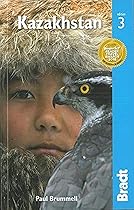
Kazakhstan Travel Guides - Kazakhstan Maps.
Weather in Asia:
Local weather forecasts for destinations around Asia.



|
|
More From Travel Notes
Travel Notes Online Guide to Travel
Africa - Asia - Caribbean - Europe - Middle East - North America - Oceania - South America.

The Travel Notes Online Guide to Travel helps visitors plan their trip with country and city travel guides, local tourist information, reviewed web sites, and inspiring travel content.
Travel Collaborations
Where travel creators, brands, and tourism partners connect and collaborate on real campaigns.

Travel Collaborations is a TravelNotes.org inspired B2B Network connecting content creators and digital nomads with travel destinations, hotels, and tourism brands looking for authentic storytelling on real campaigns.
Travel Resources

.
Travel & Tourism With Industry Professionals.

During 40 years of travel & living abroad Michel has visited some 120 countries, 220 UNESCO Heritage Sites and 100+ World Heritage Cities.
