 Mongolia Travel Guide - Gobi Desert, Ger Camps & Nomadic Life
.
Travel Notes: Asia - Mongolia Travel Notes.


Short URL: https://tnot.es/MN
Mongolia Travel and Tourism on Travel Notes
Visit Mongolia and Discover Mongolia's Rich Nomadic Heritage
Experience timeless traditions of Mongolia's nomadic herders, visit ger camps, and learn about their deep connection to the land and their unique way of life.
About Mongolia
A vast country with a rich culture, Mongolia has plenty of adventures and activities to enjoy, including horseback riding, hiking, and exploring the Gobi Desert.
Mongolia's unique blend of nomadic traditions, stunning landscapes, and rich history make it a fascinating less-visited travel destination.
Countries neighbouring Mongolia: China, and Russia.

 Add a Business Listing -
Add a Location -
Add a Lodging - Add Travel Content
- Add URL
- Travel Services.
Add a Business Listing -
Add a Location -
Add a Lodging - Add Travel Content
- Add URL
- Travel Services.
Mapping Mongolia
Map of Mongolia
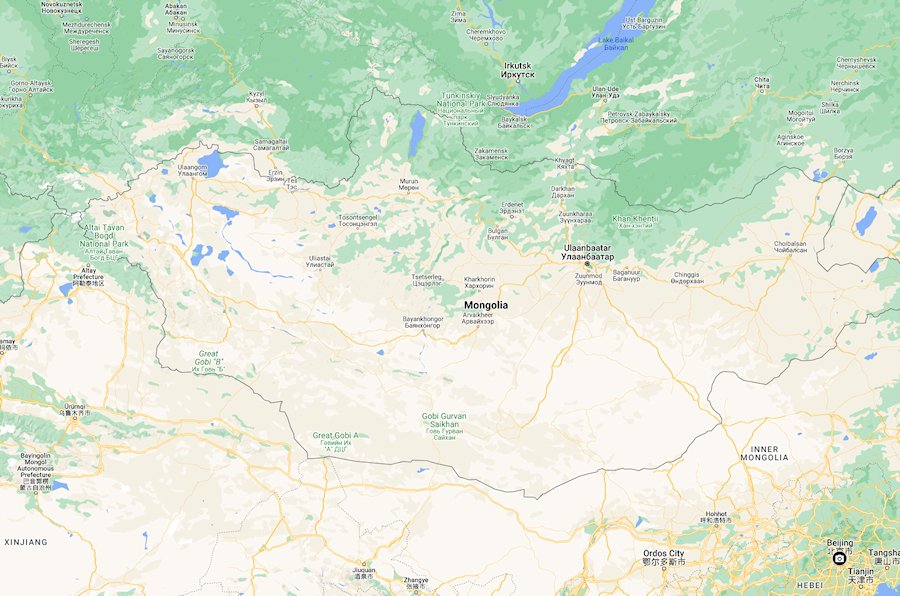
Mongolia is known for its vast, rugged landscapes, including the Gobi Desert, grassy steppes, and high mountains.
Mongolia is also known as Outer Mongolia. Inner Mongolia is the grasslands region in China.
Mongolia Overview
Mongolia, officially known as the Mongolian People's Republic, is a landlocked country located in East and Central Asia.
Mongolia shares its borders with Russia to the north and China to the south, east, and west.
Buddhism
Buddhism plays a significant role in Mongolian culture and history.
Tibetan Buddhism is the dominant religion, and numerous monasteries and temples are scattered throughout the country.
One of the most notable religious sites is the Erdene Zuu Monastery, located in Kharkhorin, which was once the capital of the Mongol Empire.
Culture
Mongolian culture is deeply influenced by its nomadic heritage and the traditional way of life.
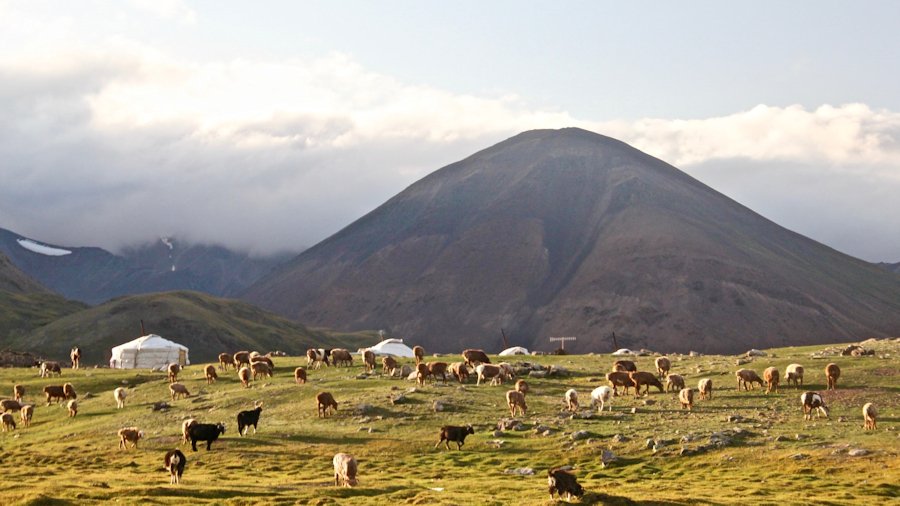
The most iconic symbol of Mongolian culture is the nomadic herders who live in gers (also known as yurts) and tend to their livestock, mainly horses, sheep, goats, and camels.
Traditional arts, such as throat singing, morin khuur (horsehead fiddle) playing, and contortion, are highly regarded in Mongolian culture.
History
Mongolia has a rich history that dates back thousands of years.
The region was home to various nomadic empires, including the Xiongnu, Turkic Khaganate, and Mongol Empire founded by Genghis Khan in the 13th century.
The Mongol Empire was one of the largest empires in history, stretching from Asia to Eastern Europe.
Nature and Wildlife
Mongolia is known for its breathtaking natural landscapes.
The country offers diverse terrains, including the Altai Mountains, Khangai Mountains, and the Gobi Desert.
The Gobi Desert, in particular, is a unique ecosystem with its vast sand dunes, rocky cliffs, and home to rare species such as the Bactrian camel and snow leopard.
The Mongolian saiga antelope is listed as critically endangered by the International Union for Conservation of Nature (IUCN). The population has experienced a significant decline in recent years due to various threats, including habitat loss, illegal hunting, and disease outbreaks.
Mongolia is also known for its abundance of bird species.
Traditional Cuisine
Mongolian cuisine is centreed around meat, particularly mutton and beef.
One of the most famous Mongolian dishes is 'buuz', which are steamed dumplings filled with meat and vegetables.
Other popular dishes include 'khorkhog' (meat stew cooked with hot stones), 'boodog' (whole roasted animal, usually goat or marmot), and 'airag' (fermented mare's milk).
Visiting Mongolia
Mongolia is a beautiful and culturally rich country located in East Asia.
Known for its vast landscapes, nomadic traditions, and historical significance, Mongolia offers a unique travel experience.
Remember to respect the local customs and traditions while travelling in Mongolia.
It's also advisable to have a local guide or join organised tours to make the most of your trip and ensure your safety.
Best Time to Visit Mongolia
Mongolia experiences extreme weather conditions, with very cold winters and hot summers.
The best time to visit is during the summer months, from June to August when the weather is pleasant and the countryside is lush and green.
Gobi Desert
A trip to Mongolia wouldn't be complete without visiting the Gobi Desert, one of the world's largest deserts.
Marvel at the vast sand dunes, unique rock formations, and diverse wildlife.
Don't miss the iconic Flaming Cliffs, famous for their dinosaur fossils.
Khuvsgul Lake
Located in the northern part of Mongolia, Khuvsgul Lake is known as the 'Blue Pearl'.
It's one of the largest freshwater lakes in Asia and offers breathtaking scenery.
You can enjoy boating, fishing, hiking, and horseback riding in the surrounding area.
Local Cuisine
Sample the local cuisine of Mongolia, which is based around meat, dairy products, and staple foods like buuz (dumplings) and khuushuur (deep-fried meat pies).
Mongolian barbecue, known as 'khorkhog', is a unique culinary experience where meat and vegetables are cooked in a traditional way.
Naadam Festival
If you have the chance, try to plan your visit to Mongolia during the Naadam Festival.
Naadam (inscribed on the UNESCO Representative List of the Intangible Cultural Heritage of Humanity in 2010) is the most famous festival in Mongolia.
Held annually from the eleventh of July, the festival was extended from three to five days by the Mongolian Government in 2020.
Showcasing the 'Three Manly Games' of wrestling, horse-racing, and archery, as well as traditional cultural performances, the festival is a celebration of Mongolian culture and heritage; attracting visitors from home and abroad.
Nomadic Culture
Mongolia has a strong nomadic heritage, and visiting a traditional nomadic family is a must-do experience.
You can learn about their way of life, try traditional food and beverages like airag (fermented mare's milk), and participate in activities such as horseback riding or milking livestock.
Outdoor Adventures
Mongolia is a paradise for outdoor enthusiasts.
Go trekking in the Altai Mountains, horseback riding in the steppes, or even join a camel safari in the Gobi Desert.
Terelj National Park
Just a short drive from Ulaanbaatar, Terelj National Park is a popular destination for both locals and tourists.
Explore the stunning landscapes, visit the Turtle Rock formation, hike to Aryabal Meditation Temple, and experience the tranquility of the park.
Ulaanbaatar
Ulaanbaatar, the capital and largest city of Mongolia, is a vibrant and rapidly developing urban centre.
The city offers a mix of modern and traditional elements, with skyscrapers standing alongside traditional ger districts.
Experience the blend of modernity and traditional Mongolian culture in the city as you explore the Gandan Monastery, the National Museum of Mongolia, and Sukhbaatar Square.
Visa Requirements
Before traveling to Mongolia, make sure to check the visa requirements based on your nationality.
Some countries may require a visa, while others might have visa-free access or visa-on-arrival options.
Dinosaur Graveyard
Fossilised dinosaur eggs were discovered in the Gobi during the American Museum of Natural History sponsored expeditions in the 1920s.
With the fall of Communism, the American Museum were invited back in the early 1990s. They discovered one of the greatest graveyards that dinosaur palaeontology has ever known - in the low, brown hills of Ukhaa Tolgod.
The Gobi Desert
The Gobi is located in Mongolia and northern China. A plateau between higher mountains, the mainly gravel plains is the coldest, most northern desert in the world. The Gobi is not entirely waterless, and several caravan trails dating from ancient times cross the Gobi region.
Marco Polo, along with his father and uncle, were the first Europeans to traverse the Gobi; around 1275.
The best time to visit the Gobi is June or September as temperatures aren't so hot then.
Sightseeing in South Gobi
Most tours of the southern Gobi region are likely to take in some, or all, of these sights.
Mongolia's tourism season is from May to October because of the difficult climate at other times of the year. Visiting out of season is not a problem as long as you can tolerate cold weather, dust storms and difficulties in travelling.
Bayandalai
Includes the Gobi Gurvan Saikhan Mountain and a visit to the Yol canyon.
Dalanzadgad
The aimag's Museum displays some of the finest examples of Dariganga craftsmanship, with saddles, knives, silver cups and decorative ropes among the exhibits.
Hongoriin els
Hongoriin els, or the Hongor Sands, is a giant sand dune stretching 180km long and anything from a couple of hundred meters wide, to as much as 7-20km. Overnight stays are arranged in a ger camp.
Kharkhorin
Surrounded by 108 stupas, Erdenezuu monastery has been a place of Buddhist activity for more than 1000 years. Kharkhorin was the first capital of the Mongolian Empire, although there's not much to show for it. If you're in Mongolia in July, don't miss the Karakorum naadam on the 11th - a three-day horse race, wrestling and archery festival to commemorate Genghis Khan's warriors.
Khorgo
Khorgo Volcano is a dead volcano covered with basalt lying in the east of the Lake Terkhiin Tsagaan (National Park) in Arhangai aimag.
Khuvsgul
Known as the Dark Blue Pearl of Mongolia, Lake Khuvsgul is one of the country's largest and most spectacular protected areas. An ideal location for boating and horse-riding. Also visit the natural history museum in Moron city.
Noyon
Visit the Noyon-Uul dead volcano. There's also a chance to observe Mongolian nomadic life and learn about their traditions.
Orkhon
The Orkhon river is popular for fishing tours. There's also a 20m high, 10m wide, waterfall - Ulaan tsutgalan.
The Baruun huree monastery, also known as Shankh hiid, is a popular attraction and a visit to a horse breeders family will allow you the chance to taste the Mongolian's favourite drink, airag (fermented mare's milk).
Terelj
Open year-round, Terelj Resort is set in a spectacular valley only a two-hour drive from Ulaanbaatar.
Togrogiin shiree
Along with Bayanzag, the area is famous for the findings of dinosaur eggs and skeletons of giant, prehistoric animals.
Tsetserleg
Where steppes and desert meet, Tsetserleg is considered Mongolia's most beautiful aimag (province). You can also visit the Tsenkher hot spa for a relaxing bath.
Ulaanbaatar
Map of Ulaanbaatar
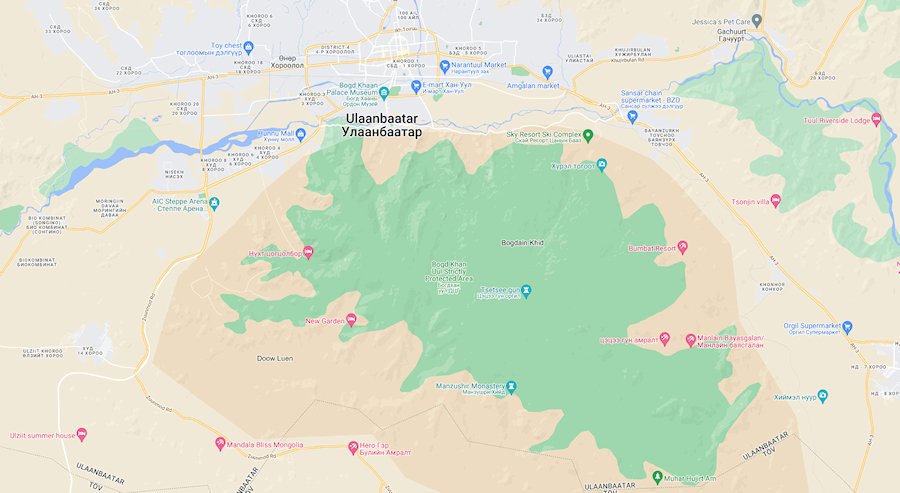
Also known as Ulan Bator, the capital of the Republic of Mongolia is in the Tuul River valley, in the north central region of the country.
Trunk roads connect Ulan Bator to all the major towns in Mongolia, and by rail to the Trans-Siberian and Chinese railway network.
The city expanded greatly after World War II, with planning aid from the Union of Soviet Socialist Republics (USSR).
The broad tree-lined boulevards and squares of the city are lined with large Neo- Classical buildings.
The city was founded in 1649 as a monastic centre and eventually became the seat of the Living Buddha.
The Monastery of the Living Buddha, the residence of the nation's former spiritual leader, is now a museum.
In the mid-19th century, Ulan Bator developed through its position on the trade route between Russia and China.
The Communist Mongolian People's Republic was established in 1924, and the city was renamed Ulaanbaatar-- Red Hero, in Mongolian.
Lamaist Buddhism was suppressed by the Communists in 1929, and only one small monastery remains in Ulaanbaatar.
Eating Cheap in Ulan Bator
The guanz is an institution in Mongolia, and especially in Ulaanbaatar's fast-paced city life.
A guanz is a small and inexpensive restaurant that sells typical Mongolian fare.
Embassies
US Embassy in Mongolia:
Denver Street #3
11th Micro-District
Ulaanbaatar 14190
Mongolia News
Founded in 1996, the UB Post has become Mongolia's leading English-language news outlet.
Getting to Mongolia
Mongolia has 21 provinces (aimags in Mongolian), with the South Gobi Province (Umnugobi aimag) being the largest and most sparsely populated.
Most tourists arrive in Mongolia through Buyant Ukha airport, 18km south-west of Ulaanbaatar.
Airlines:
International operators serving Mongolia are Aeroflot, Air China, Korean Airlines and MIAT
Mongolian Airlines.
Flying to Ulaanbaatar
From China
Beijing to Ulaanbaatar with MIAT Mongolian Airlines or Air China.
From Europe
Berlin (twice weekly) to Ulaanbaatar, with MIAT Mongolian Airlines.
Moscow to Ulaanbaatar, with Aeroflot.
From Japan
Osaka to Ulaanbaatar, with MIAT Mongolian Airlines.
From South Korea
Seoul to Ulaanbaatar, with MIAT Mongolian Airlines or Korean Airlines.
Getting Around Mongolia
Mongolia is a vast country with an infrastructure that is still developing. Some roads are very poor or not there at all, communication is testing and accommodation in some areas is very basic.
It is for this reason that many people choose to go on an organised tour to the southern region; sleeping under canvas, in a typical Ger camp.
Trans-Mongolian Train
Mongolia is also a popular stop with travellers on the Trans-Mongolian, Moscow to Beijing, rail route.
Genghis Khan
Born Temujin, the famous Mongol conqueror's nomad armies conquered a vast empire from China to Russia, and west through Pakistan to Iran and Iraq.
The young Temujin succeeded his father as tribal chief at the age of 13.
By the time he was in his fifties his ruthlessness earned him the name Genghis Khan. In Chinese genghis means precious warrior and khan is Turkish for lord.
The Mongol ruler's empire was so well arranged that travellers were said to be able to go from one end of his domain to the other without fear or danger.
His rivals and enemies had no such chance and were massacred as a rite of conquest.
Kublai Khan, the grandson of Genghis Khan, extended the empire to its greatest reach in the late 1200s and founded the Yuan dynasty, which lasted until 1368.
Genghis Khan: Life, Death and Resurrection
Genghis Khan is one of history's immortals, alive in memory as a scourge, hero, military
genius and demi-god. To Muslims, Russians and westerners, he is a murderer of millions, a
brutal oppressor. Yet in his homeland of Mongolia he is the revered father of the nation,
and the Chinese honour him as the founder of a dynasty.
The Secret History of the Mongols:
English edition of the great 13th century historical epic - the only surviving Mongol
source about the empire. The book is mainly about the life and career of Chinggis Khan,
his ancestors and his rise to power.
Mongolian Language and Culture
The official language of Mongolia is Mongolian; an Altaic language.
Mongolian Horses
From the exploits of Genghis Khan to the herds of the modern nomads, the vast plains of the Eurasian steppe are tightly woven with equine tradition.
In Mongolia horses have shaped the nation and still outnumber the human population.
Horesriding in Mongolia - Ride into the Altai
Explore the far reaches of Mongolia’s national parks, on a Secret Compass 17-day horseback adventure in a class of its own. Get to grips with Kazakh and Mongolian traditions as you ride in the company of the true nomads: the Kazakh Eagle Hunters.
A visual homage to the indigenous Kazakh Eagle Hunters in Mongolia by Jimmy Nelson.
Mongolia Maps and Travel Guides


Mongolia Travel Guides - Mongolia Maps.
Weather in Asia:
Local weather forecasts for destinations around Asia.



|
|
More From Travel Notes
Travel Notes Online Guide to Travel
Africa - Asia - Caribbean - Europe - Middle East - North America - Oceania - South America.

The Travel Notes Online Guide to Travel helps visitors plan their trip with country and city travel guides, local tourist information, reviewed web sites, and inspiring travel content.
Travel Collaborations
Where travel creators, brands, and tourism partners connect and collaborate on real campaigns.

Travel Collaborations is a TravelNotes.org inspired B2B Network connecting content creators and digital nomads with travel destinations, hotels, and tourism brands looking for authentic storytelling on real campaigns.
Travel Resources

.
Travel & Tourism With Industry Professionals.

During 40 years of travel & living abroad Michel has visited some 120 countries, 220 UNESCO Heritage Sites and 100+ World Heritage Cities.
